Restoration begins with seed.
And seed begins with skilled people.
Across Australia, demand for native seed is growing rapidly. Carbon projects, mine rehabilitation, biodiversity conservation, Nature Repair projects and ecological restoration all rely on access to high-quality native seed — collected from the right species, in the right place, at the right time.
Many regions are already experiencing seed shortages, creating a growing demand for people with practical skills in seed collection, seed handling and restoration planning.
This training pathway introduces Indigenous rangers and environmental practitioners to the foundations of native seed collection and restoration practice.

What You Will Learn
Seven modules. From systems to soil.
Understanding Native Seed Systems
- ·The role of seed in restoration and rehabilitation
- ·Why seed supply matters
- ·Restoration project life cycles
- ·Seed demand across carbon, biodiversity and rehabilitation projects
Seed Collection Planning
- ·Understanding target species
- ·Seasonal planning
- ·Collection permits and approvals
- ·Working with Traditional Owners and cultural protocols
- ·Site selection and collection planning
Provenance and Genetics
- ·Why provenance matters
- ·Local adaptation and climate resilience
- ·Genetic diversity considerations
- ·Risks associated with inappropriate seed sourcing
- ·Future climate and restoration planning
Field Seed Collection Techniques
- ·Species identification
- ·Assessing seed maturity
- ·Collection methods for different species
- ·Equipment and safety requirements
- ·Recording field observations
Seed Handling and Storage
- ·Cleaning and processing
- ·Seed storage principles
- ·Maintaining seed viability
- ·Documentation and traceability
Data Collection and Monitoring
- ·Collection records
- ·GPS and mapping
- ·Provenance information
- ·Environmental observations
- ·Digital field data systems
Restoration Readiness
- ·Understanding species lists
- ·Restoration project planning
- ·Seed supply forecasting
- ·Working with nurseries and restoration practitioners
Learning Outcomes
Practical skills. Held by the people of Country.
Participants leave with skills that are immediately useful in ranger work, restoration projects and community seed banks.
- 01
Native seed collection
- 02
Seed handling and storage
- 03
Provenance documentation
- 04
Field data collection
- 05
Restoration planning
- 06
Biodiversity monitoring
- 07
Environmental reporting
Why It Matters
Native seed is more than a restoration input.
It carries genetics, adaptation, ecological function and connection to Country.
As investment in restoration, biodiversity and carbon projects continues to grow, the need for skilled seed practitioners will continue to increase.
Building Indigenous capability in native seed systems helps ensure that restoration outcomes are stronger, local knowledge is valued and more environmental investment remains connected to Country.
Delivery Options
We deliver training where it works best — on Country.
On-Country workshops
Ranger training programs
Community seed collection intensives
Restoration readiness training
Custom training for Indigenous organisations and land management groups
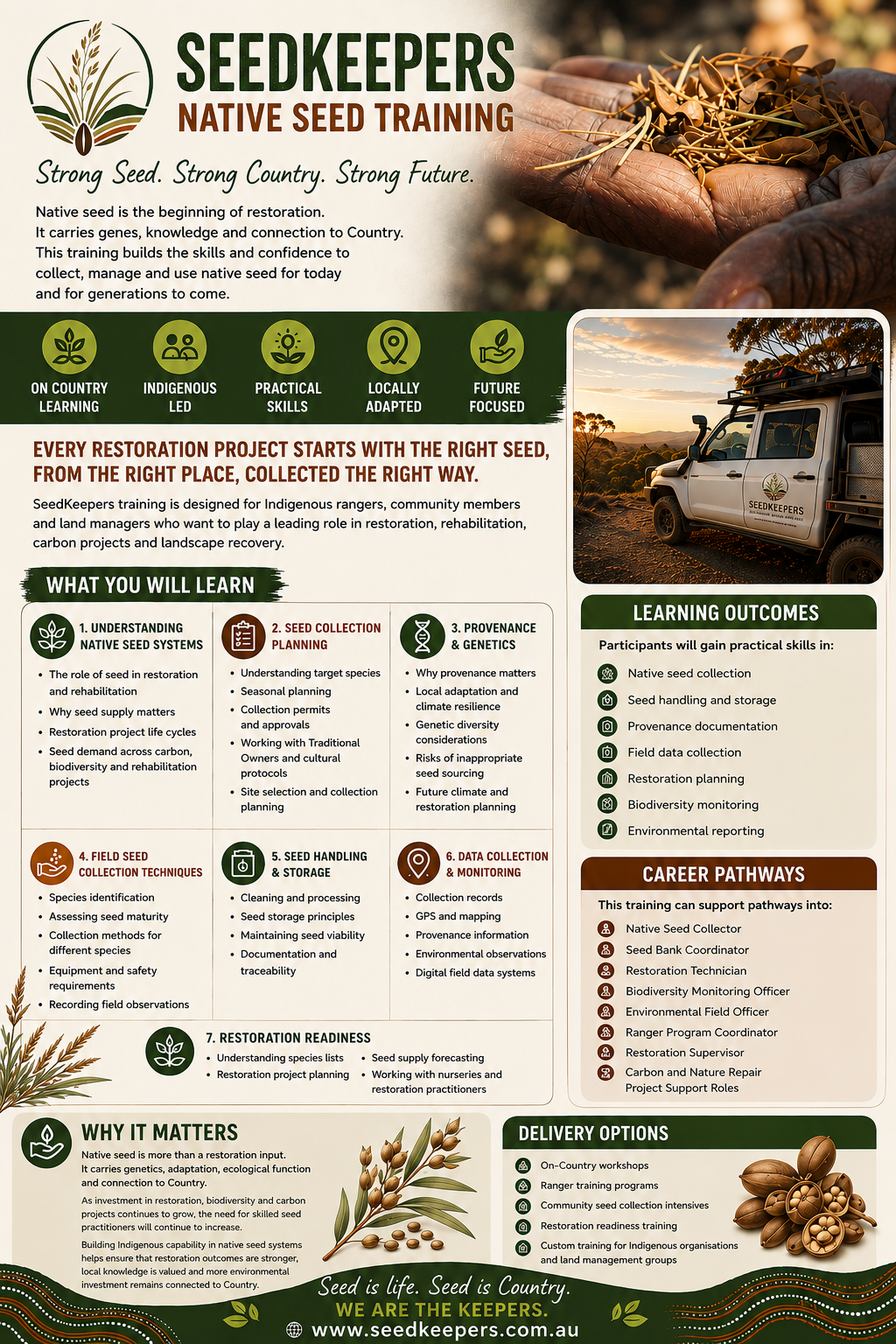
Free Download
SeedKeepers Native Seed Training Poster.
A single-page overview of the program — modules, learning outcomes, career pathways and delivery options. Print, share or hand around at community meetings.
Next