Collecting seed is about more than access.
Native seed collection occurs within a complex landscape of legislation, land tenure, cultural authority and environmental responsibility.
Successful seed collection begins with relationships and permissions — not collection equipment.
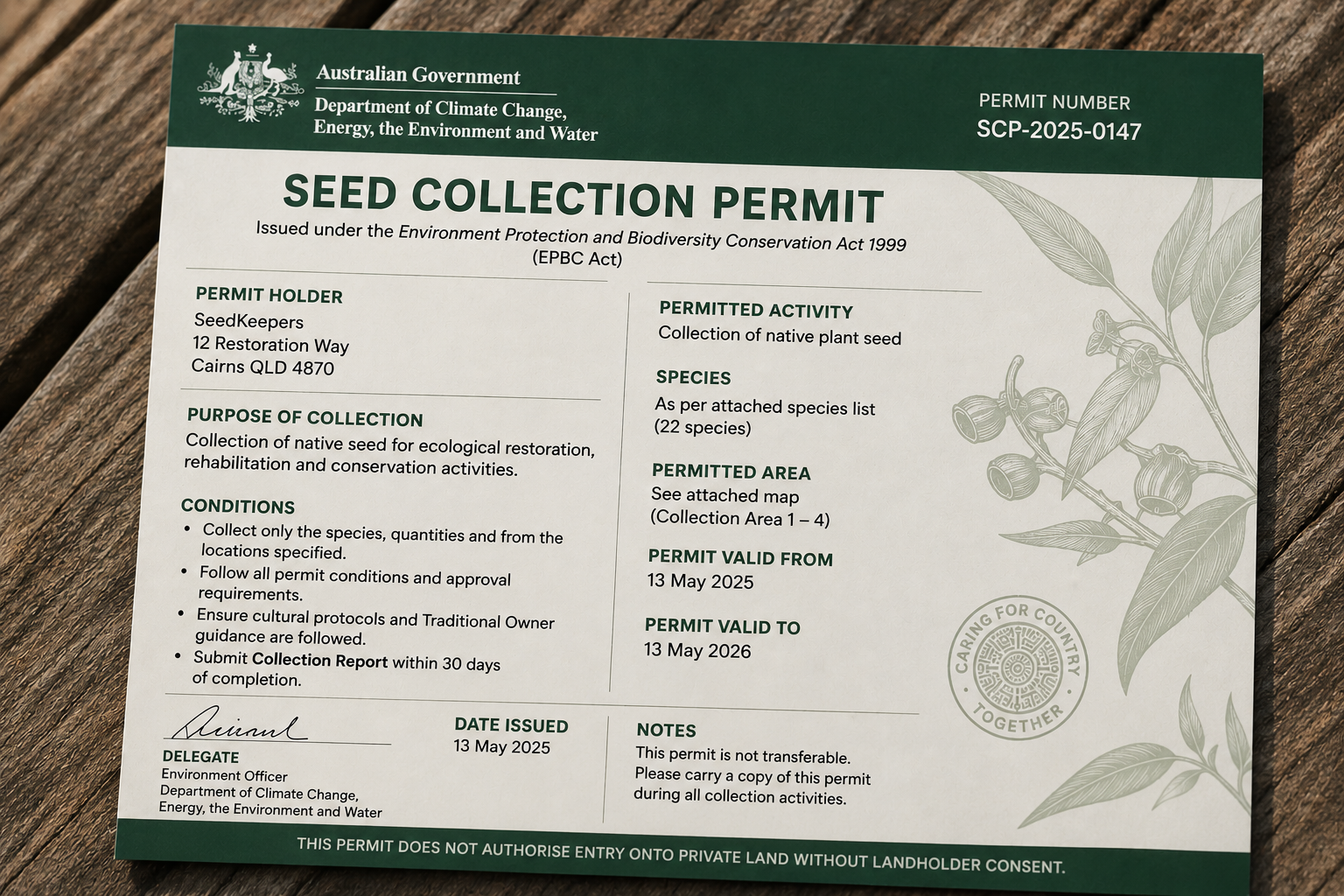
Before seed is collected
Consideration should be given to:
- 01
Land tenure and ownership
- 02
Native Title rights and interests
- 03
Protected area regulations
- 04
Cultural authority and Traditional Owner permissions
- 05
Environmental approvals
- 06
Collection permits and licences
- 07
Threatened species requirements
- 08
Access agreements
- 09
Benefit-sharing obligations
Understanding the Regulatory Landscape
Approval pathways vary by location and species.
Requirements vary significantly between jurisdictions and land tenures. Early planning is essential.
- 01
State and Territory permits
- 02
National park permits
- 03
Vegetation management requirements
- 04
Threatened species approvals
- 05
Indigenous Land Use Agreements
- 06
Native Title considerations
- 07
Landholder permissions
- 08
Commercial access agreements
Beyond Compliance
Meeting legal requirements is important. But compliance alone does not create trust.
The strongest seed collection programs are built on:
- 01
Respectful engagement
- 02
Clear communication
- 03
Transparency
- 04
Shared benefits
- 05
Long-term relationships
- 06
Stewardship responsibilities
Legal
Permits may grant legal access.
Social
Relationships create social licence.
Both matter.
Seed Collection Readiness
Before collecting seed, ask:
- 01
Who are the Traditional Owners?
- 02
Has cultural authority been recognised?
- 03
Who owns or manages the land?
- 04
Are permits required?
- 05
Are there Native Title considerations?
- 06
Are there threatened species restrictions?
- 07
Have benefits and responsibilities been discussed?
- 08
How will collection information be recorded and managed?
- 09
Who will have access to the data?
- 10
What happens after collection?
If these questions remain unanswered, the project may not yet be collection ready.
Next