✦Restoration begins with seed
Indigenous Seed Enterprises. Restoration. Training. Leadership.
SeedKeepers supports Traditional Owner groups, Indigenous organisations and ranger teams to build native seed enterprises, establish community seed banks and participate in Australia’s growing restoration economy.
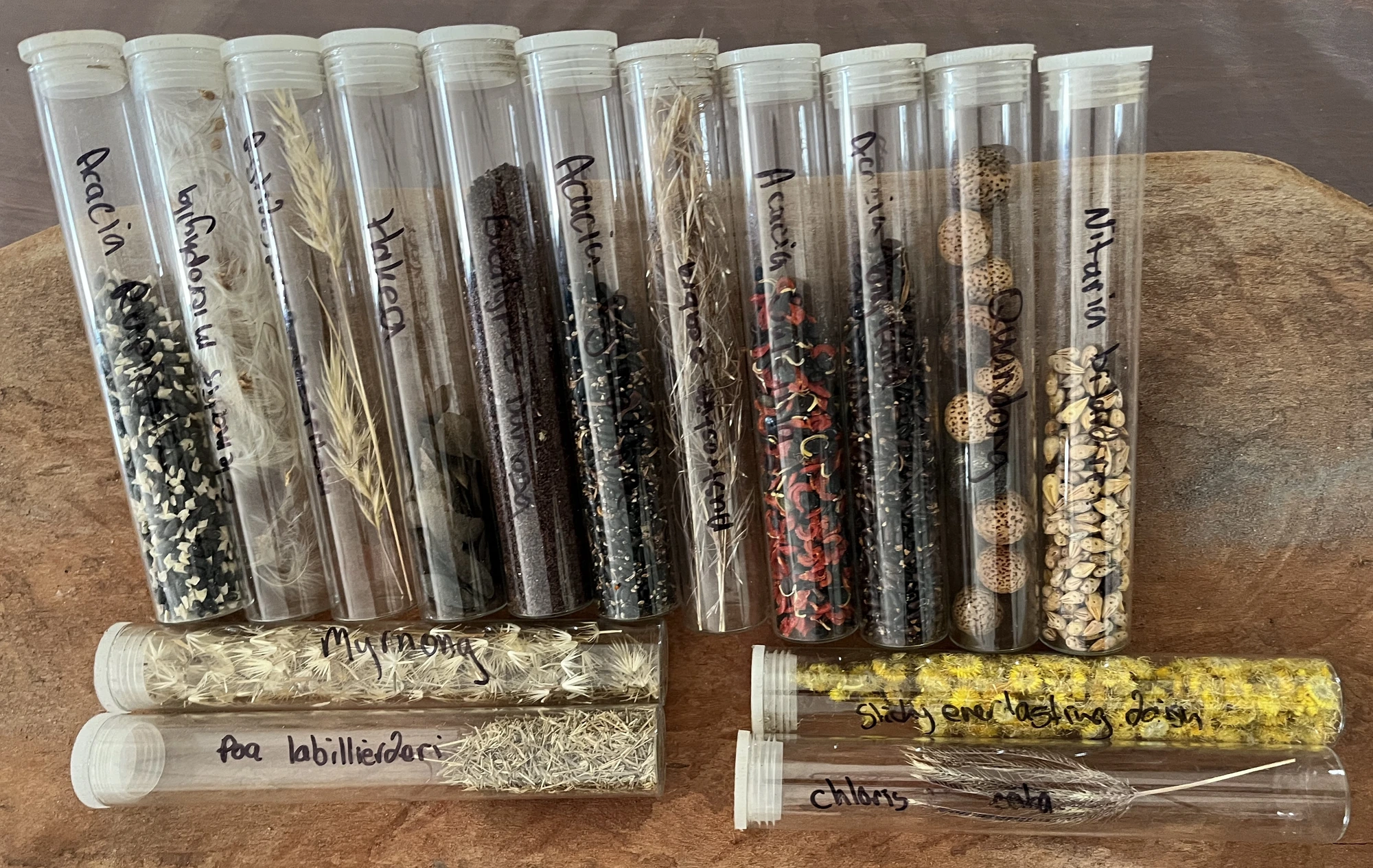
Native seed reference collection· Acacia, Halgania, Myrnong, Nitraria, Quandong and more
01Our Mission
Native seed sits at the centre of every restoration project.
It is the foundation of biodiversity recovery, landscape restoration and climate resilience. It is also a powerful pathway for strengthening cultural knowledge, creating employment and building community capacity.
Through training, enterprise development, restoration planning, ecological mapping and digital tools, SeedKeepers helps communities transform local knowledge and environmental stewardship into practical opportunities that support Country, culture and livelihoods.
Five pillars
- 01Biological Infrastructure
- 02Knowledge Infrastructure
- 03Governance Infrastructure
- 04Enterprise Infrastructure
- 05Restoration Infrastructure
02Begin Here
Every restoration journey begins from a different place.
Explore the pathway that best reflects your role, responsibilities and connection to Country.
Traditional Owner Groups
Custodians of Country leading stewardship, restoration and cultural authority.
Read pathwayRanger Programs
Ranger teams delivering monitoring, seed collection and on-Country restoration.
Read pathwayMining & Resources
Organisations seeking reliable seed supply and stronger rehabilitation outcomes.
Read pathwayRestoration Practitioners
Ecologists, contractors and consultants delivering restoration on the ground.
Read pathwayFunders & Investors
Supporting the infrastructure, enterprises and systems that restoration depends upon.
Read pathway03Why Seed?
Every restoration project begins with seed. Yet seed is much more than a restoration resource.
For many communities, seed collection provides a practical reason to be on Country. It brings Elders, knowledge holders, rangers, students and families together to share stories, identify plants, understand landscapes and pass knowledge from one generation to the next.
Seed creates opportunities for participation. Participation strengthens knowledge, confidence and leadership. Over time, these activities help build the skills, relationships and community capacity required for long-term stewardship.
At the same time, native seed is becoming an increasingly valuable resource within Australia’s restoration economy — across biodiversity projects, mining rehabilitation, conservation programs and climate resilience initiatives.
SeedKeepers exists to help Indigenous communities participate in and lead this emerging sector.
04 Building Indigenous Seed Enterprises
Generations of ecological knowledge — converted into meaningful enterprise.
Across Australia, Traditional Owners hold generations of ecological knowledge relating to plants, landscapes, seasonal indicators and the sustainable management of Country. As investment in restoration grows, there is a significant opportunity for communities to convert this knowledge into meaningful employment and long-term economic participation.
SeedKeepers works with communities to establish seed enterprises grounded in cultural authority, ecological integrity and local aspirations.
Our goal is to increase Indigenous participation and leadership throughout the native seed and restoration sectors.
We support
- 01Indigenous seed enterprises
- 02Ranger seed collection programs
- 03Community seed banks
- 04Seed production areas
- 05Nursery development
- 06Restoration businesses
- 07Stewardship services
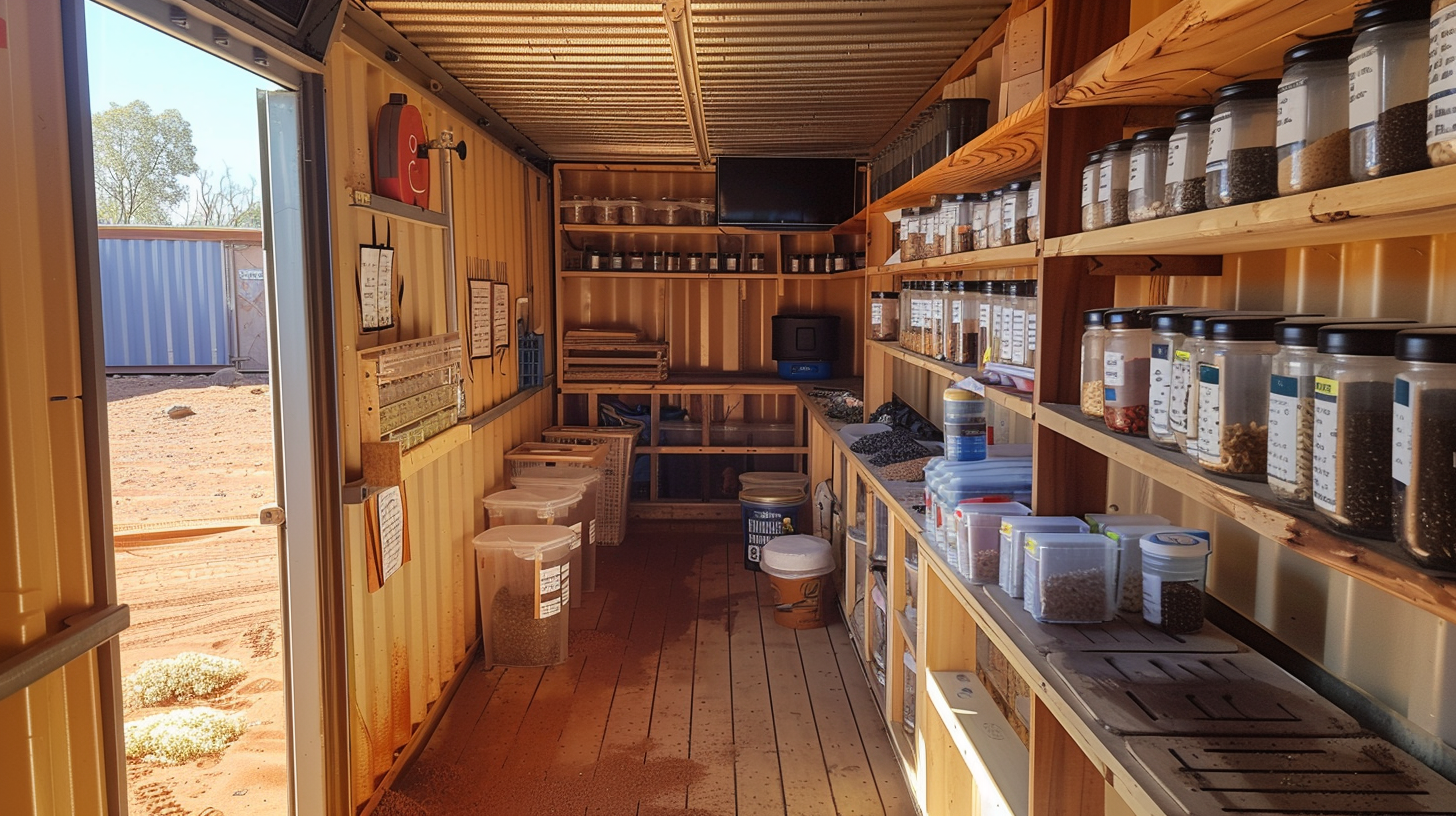
05Community Seed Banks
The most important piece of infrastructure in the SeedKeepers model.
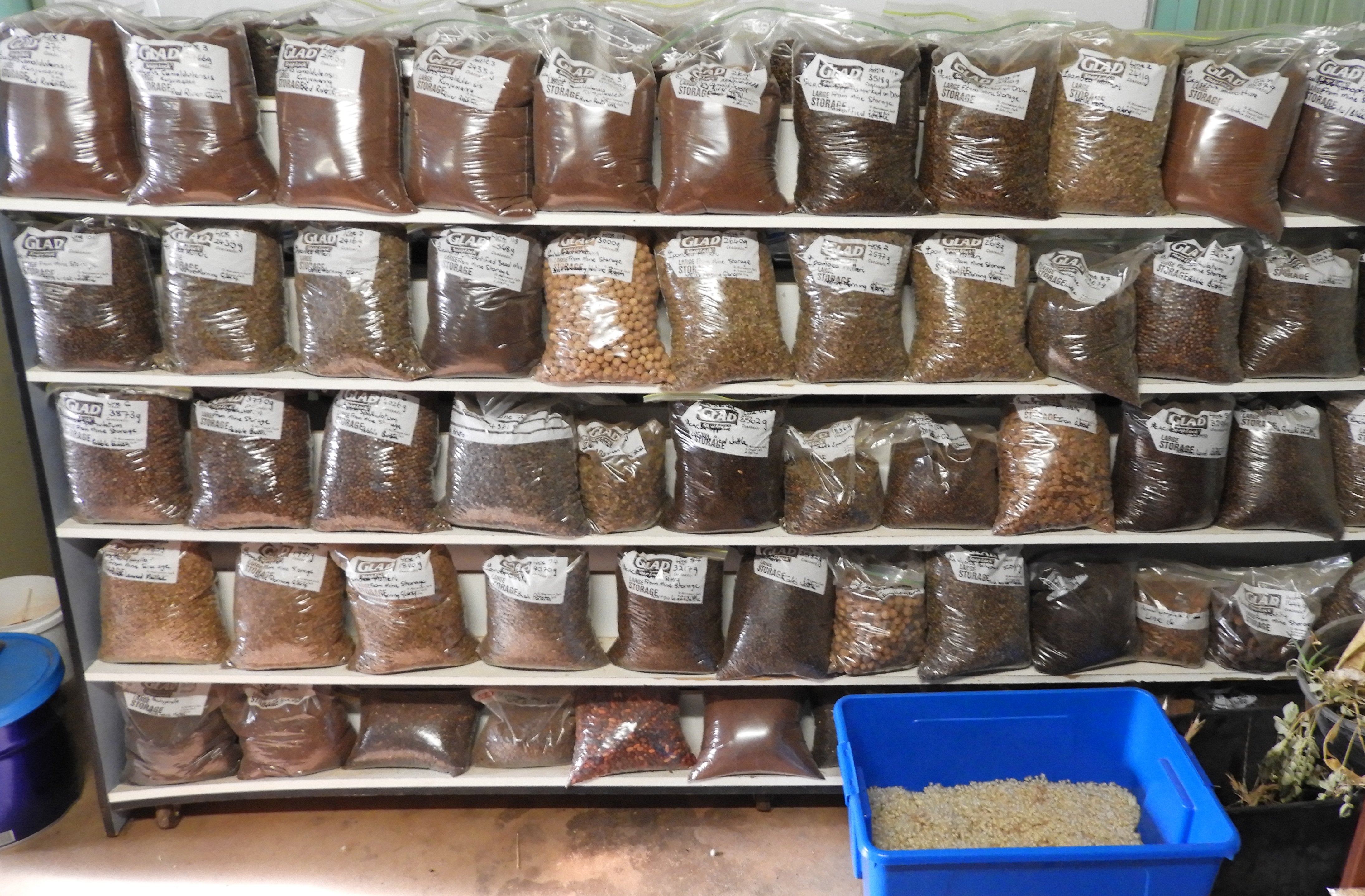
While they provide secure storage for valuable seed resources, their role extends far beyond storage alone. Community seed banks become places where people gather, knowledge is shared and future opportunities are created.
Seed banks support restoration projects, ranger programs, school engagement, ecological monitoring and enterprise development.
Seed banks support
- 01
Local seed supply
- 02
Species conservation
- 03
Ranger training
- 04
School engagement
- 05
Knowledge sharing
- 06
Restoration projects
- 07
Enterprise development
06SeedKeepers Academy
Learn. Then help build Australia’s restoration future.
SeedKeepers Academy develops Australia’s restoration workforce through practical learning, live mentoring, professional certification and community — from your first seed to national accreditation.
Eight learning levels. A twelve-week Accelerator. A national community of stewards. A doorway from casual interest to a professional life in restoration.
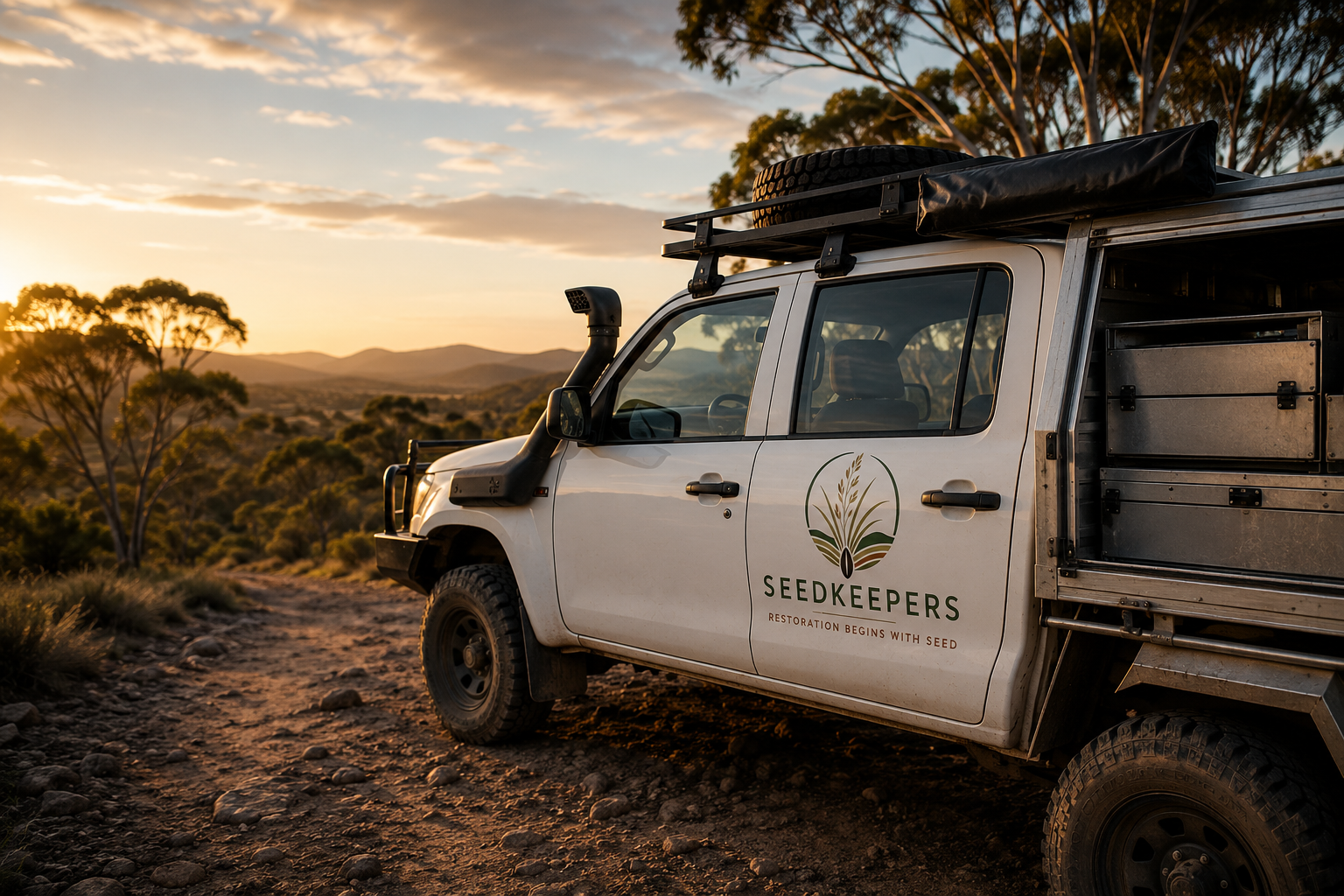
On-Country learning · Live mentors · National community
What the Academy offers
Eight-level pathway
From reading landscapes and provenance-based practice to seed banking, enterprise and capstone certification.
12-Week Accelerator
Flagship live mentoring, field demonstrations, practical projects and a real capstone — a premium restoration leadership experience.
National community
Regional learning circles, mentors, live workshops, seed exchanges and a marketplace linking learners into Australia's restoration network.
07Knowledge, Country, Product
Two programs that extend community benefit beyond restoration.
Native plants — beyond restoration.
Traditional medicines, bush foods, essential oils, natural skincare and cultural tourism experiences. Enterprises grounded in cultural knowledge and care for Country.
Explore Bush BotanicsEvery seed tells a story about a landscape.
Spatial tools that help communities identify and communicate seed collection zones, cultural plant species, ecosystems, restoration priorities and ranger activities.
Explore Bush MapsSPIRITTM
Seed Provenance Intelligence & Restoration Information Technology
The future of restoration depends on understanding more than seed.
SPIRIT is an integrated provenance intelligence platform developed by SeedKeepers to support the collection, management and analysis of provenance, population genetics, ecological metadata, cultural governance and climate adaptation datasets associated with native seed resources.
Designed for Traditional Owner organisations, ranger groups, seed collectors, researchers and restoration practitioners, SPIRIT brings together four critical knowledge domains.
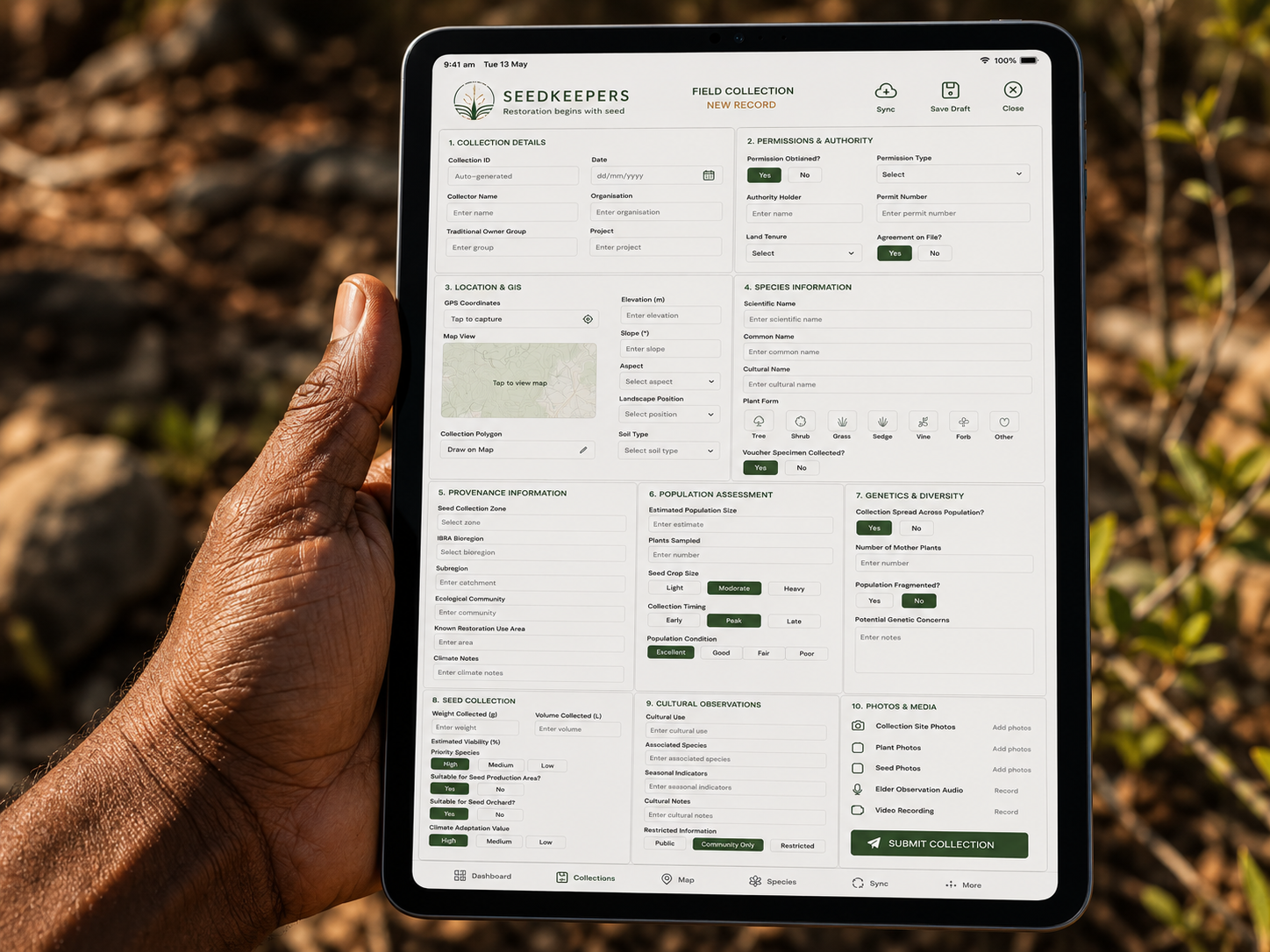
SPIRITTM on iPad · in the field · seedkeepers.app
Registered Partner Access
Currently available to approved SeedKeepers partners, Traditional Owner organisations, ranger groups, research institutions and restoration practitioners participating in pilot programs.
Access SPIRITAvailable to registered SeedKeepers partners and pilot participants.
Four knowledge domains
Ecological Intelligence
Site characteristics, species associations, environmental conditions and collection metadata.
Genetic Intelligence
Provenance information, population diversity, germplasm records and genetic observations.
Cultural Intelligence
Traditional Owner authority, cultural permissions, knowledge governance and stewardship obligations.
Climate Intelligence
Climate resilience indicators, environmental change monitoring and adaptation planning.
SPIRIT is being developed as a secure platform to strengthen Indigenous-led restoration, support evidence-based decision making and build the knowledge infrastructure needed for future conservation and climate adaptation programs.
Field Dispatch
Occasional notes from the field.
Sign up for a quiet, occasional email when there's something worth reading — new bulletins on the seed system, restoration economy updates, and openings for practitioners, communities and partners.
No spam. Unsubscribe any time. Email only — we never share your details.
Our Vision
Indigenous communities should play a leading role in Australia’s restoration future.
A national network of Indigenous seed enterprises, community seed banks, ranger programs and restoration leaders supplying the knowledge, seed and stewardship required to restore landscapes across Australia.
By strengthening Indigenous participation and leadership in the native seed sector, communities can create employment, build enterprises, support biodiversity recovery and maintain the knowledge systems that have sustained Country for generations.
Seed is where the journey begins. From that seed grows restoration, opportunity, leadership and the future care of Country.