
Back to Library
Article · 5 June 2026
The Missing Link in Restoration
Restoration targets are aspirational without the seed systems that make them real. A short essay on what we keep getting wrong.
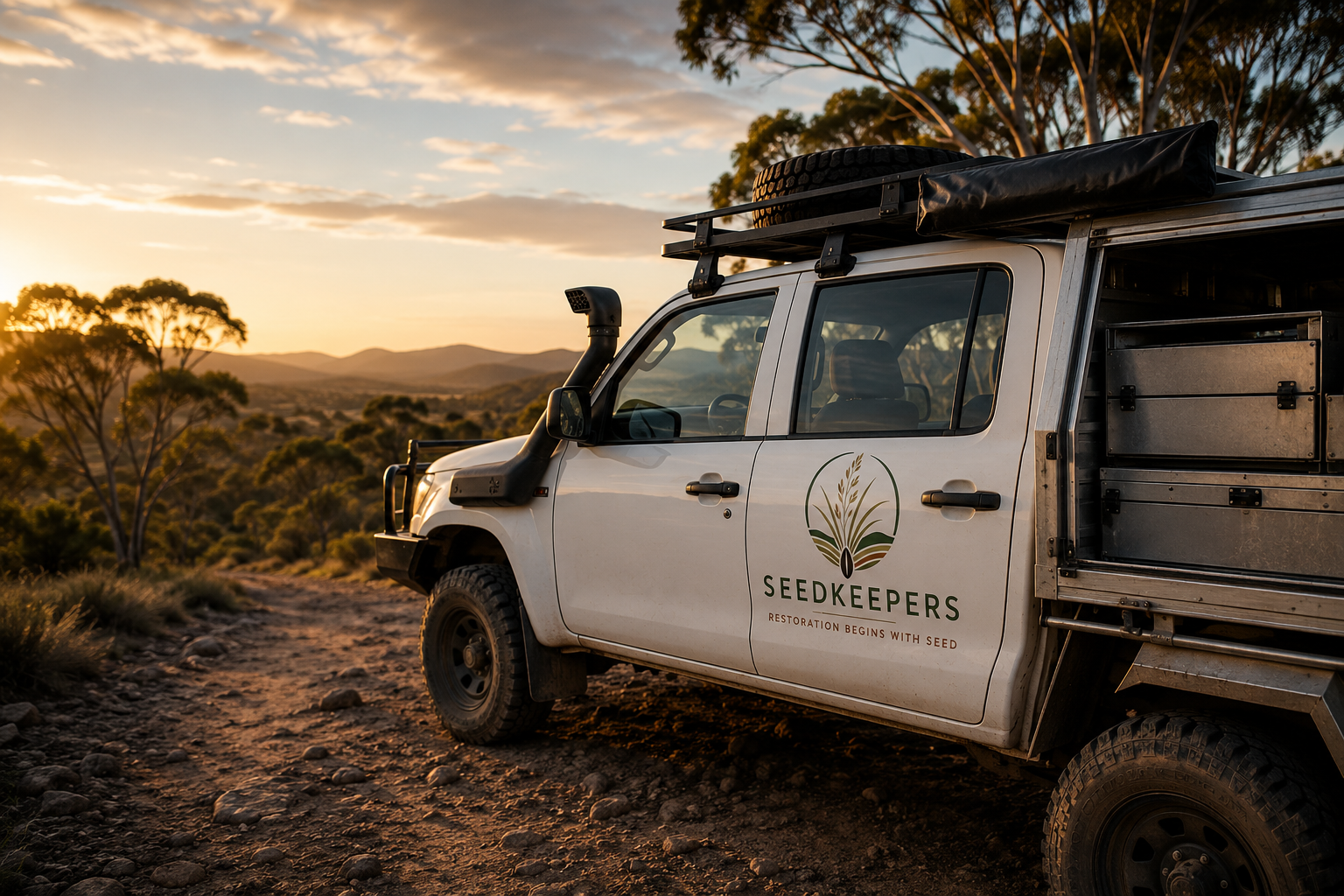
The Missing Link in Restoration
Across Australia, restoration has become one of the defining environmental challenges of our time. Governments are investing in biodiversity recovery. Mining companies are expanding rehabilitation programs. Traditional Owners are leading land and sea management initiatives. Carbon and nature markets are creating new incentives for revegetation and ecological repair. Everywhere you look, there is growing momentum around the idea of restoring Country.
Yet beneath this momentum sits an assumption that is rarely questioned.
Most restoration plans assume seed will be available when it is needed.
Often, it is not.
Not in the volume required. Not from the appropriate provenance. Not with the genetic diversity needed to support resilient ecosystems. Not within the timeframes expected by project managers, funders or contractors.
This challenge is increasingly recognised across the restoration sector, yet it is often described as a seed shortage. While there is certainly a shortage of seed in many regions and species groups, that explanation only scratches the surface. The deeper issue is that Australia has spent decades discussing restoration outcomes while investing comparatively little in the systems required to produce those outcomes.
The missing link is not goodwill. There is no shortage of people who care about restoring landscapes.
The missing link is not ambition. Australia has set some of the most significant biodiversity, climate and rehabilitation targets in its history.
Increasingly, the missing link is not even capital. Billions of dollars are now being directed toward restoration, rehabilitation, carbon projects and biodiversity initiatives.
The missing link is biological infrastructure.
Most people understand physical infrastructure. Roads allow transport. Ports enable trade. Communications networks connect people and information. These systems are rarely noticed when they function well, yet their absence quickly becomes obvious.
Restoration depends on infrastructure too. It is simply less visible.
Seed banks, seed production areas, provenance systems, monitoring programs, Indigenous knowledge systems, governance arrangements and skilled practitioners all form part of the infrastructure that makes restoration possible. They create the capability required to move from restoration ambition to restoration delivery.
Without them, restoration remains dependent on opportunistic seed collection, fragmented planning and short-term project cycles.
The native seed sector provides a useful example. Across the country there are highly skilled collectors, nurseries, researchers, ranger groups, Traditional Owners and restoration practitioners working to supply seed for an expanding restoration economy. Yet much of the system remains reactive. Seed is often sought after restoration projects have already been designed. Collection opportunities are identified after funding has been secured. Provenance considerations emerge once planting schedules have been established.
By the time these challenges become visible, the opportunity to address them has often passed.
The result is a cycle that many practitioners know well. Restoration targets are established. Seed availability becomes a constraint. Timelines are adjusted. Species lists are modified. Compromises are made.
The issue is rarely a lack of commitment.
The issue is that the supporting infrastructure was never built.
This is where the conversation needs to change.
Rather than asking how to source more seed, we should be asking how to build the systems that make reliable seed supply possible. Rather than focusing solely on restoration projects, we should be investing in restoration capability. That means supporting the seed banks that safeguard genetic resources, the Seed Production Areas that create reliable future supply, the governance systems that support stewardship, and the people who maintain these systems over time.
It also means recognising the central role of Traditional Owners.
Across Australia, Indigenous peoples have maintained relationships with Country for thousands of years. Indigenous knowledge systems continue to provide critical insights into species, landscapes, seasonal conditions and ecological change. Yet too often, Traditional Owners are engaged after restoration priorities have already been established. Restoration becomes stronger when cultural authority, local knowledge and long-term stewardship are embedded from the beginning rather than added later.
The future of restoration will depend upon our ability to connect these elements into functioning systems.
Seed supply cannot be separated from stewardship. Stewardship cannot be separated from knowledge. Knowledge cannot be separated from Country.
Each depends on the other.
This is why the challenge facing restoration is not fundamentally a seed problem.
It is a systems problem.
And systems require infrastructure.
As restoration demand continues to grow, the question facing Australia is not simply how many hectares can be restored this year. The more important question is whether we are building the capability required to support healthy landscapes for decades to come.
The answer will not be found in any single project, organisation or funding program.
It will be found in the systems we choose to build.
Australia cannot restore what it cannot seed.
And it cannot seed at scale without investing in the biological infrastructure that makes restoration possible.
That infrastructure already exists in fragments across the country. The challenge now is to strengthen it, connect it and invest in it for the long term.
Because the missing link in restoration is not ambition.
The missing link is infrastructure..
essayrestoration
Filed by SeedKeepers